Duke Farms 2026 Master Plan
Background
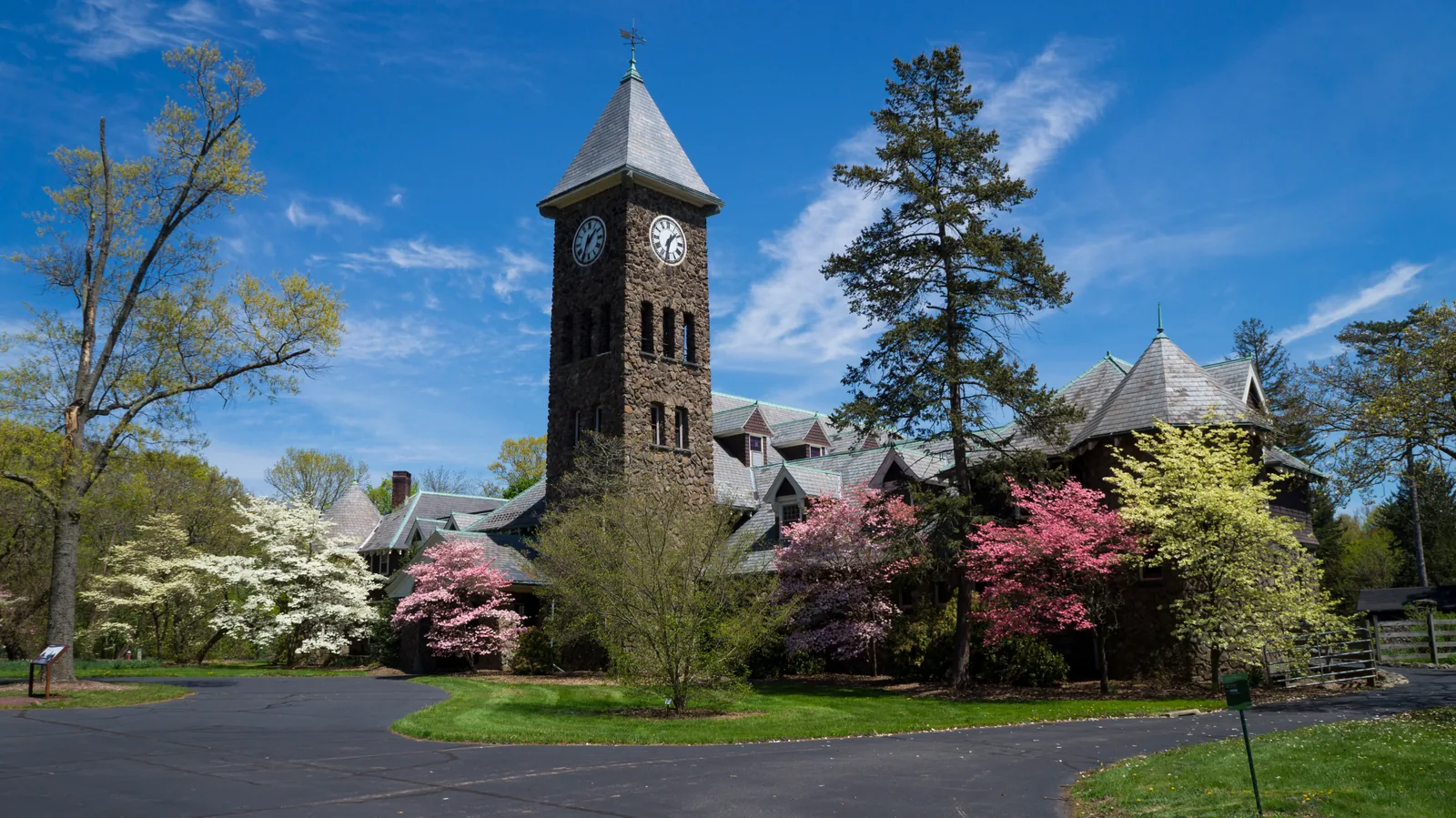
The 2026 Master Plan presents a vision for the future of campus facilities that aligns Duke Farms' physical campus, ecological systems, and communities with its mission. This vision captures the unique opportunities presented by the campus's buildings, infrastructure, and designed landscapes to support Duke Farms' integrated capabilities.
Developed between fall 2025 and spring 2026, the plan is a living document marking the next critical milestone in the evolution of the Duke Farms campus. Building upon the 2007 Master Plan, which guided the transformation from a private estate to a nature park, this 2026 plan is anchored in sustainable stewardship to steer the physical transformation of Duke Farms from a nature park to a platform for impact.
Building on the Duke Farms Legacy
The 2026 Master Plan builds on the cultural, environmental and economic legacy of Duke Farms to shape a sustainable future rooted in the value of the past. It will operationalize three integrated capabilities.
1Restore
Protect and improve biodiversity and ecosystem health through active environmental stewardship, applied conservation, and targeted restoration.
2Demonstrate
Model nature-positive, carbon-negative practices through sustainable operations, infrastructure, and landscape management.
3Engage
Cultivate leaders, partners, and communities through programs, convenings, storytelling, and inclusive access to Duke Farms.
Campus Explorer
Strategic Management Units
The Master Plan organizes Duke Farms into four strategic management units: Core Campus, Farm Barn, Western Farms, and Lowlands.
Loading the interactive campus map…
These management units help guide long-term planning, investment, and implementation. Rather than treating the campus as a single homogeneous landscape, each management unit reflects its unique operational, ecological, and programmatic role while advancing the shared objectives to Restore, Demonstrate, and Engage. This framework provides a consistent basis for evaluating assets, prioritizing capital investments, coordinating infrastructure improvements, and sequencing implementation so that individual projects contribute to a cohesive campus-wide vision.
Key Master Plan Outcomes
Through strategic investment across the constructed landscapes, utilities, and buildings on the Duke Farms campus, the 2026 Master Plan aims to advance four key outcomes:
01Robust applied research capabilities
A state-of-the-art physical hub for the Center for Conservation to support applied research, innovation, and knowledge sharing:
- Fully-equipped laboratory, collaboration, and research support space
- Live-work space for permanent and visiting scientists
- Expanded infrastructure for equipment maintenance and fieldwork
- Classroom and demonstration space within Western Farms to engage visitors where research happens
02Expanded and Elevated Convening Capacity
Establishment of Duke Farms as a hub for mission-aligned convening:
- A new fully-supported convening and education complex for groups up to ~35 people, including lodging, indoor and outdoor gathering space, and catering
- Expanded capacity for larger events (up to ~100 attendees) with flexible classroom/auditorium space, small group breakout space, and outdoor event space
- Elevated venues within the campus’ signature legacy buildings for small events and exhibits
03Increased public benefit
Broader, deeper impact to local and visiting communities through:
- Expanded trail network across the Western Farms and Lowlands Areas
- Increased opportunities for programs and engagement in legacy buildings
- Connection to conservation and sustainable operations through new and adapted facilities
- Improved community resilience through sustainable infrastructure and land management
04Decarbonizing Operations
Continued leadership to move beyond net-zero facilities operations through nature-based solutions, energy efficiency, materials decarbonization, electrification, and renewables, including:
- Retrofit and stewardship of existing buildings to aggressively reduce energy use, eliminate fossil fuel consumption, and reduce embodied carbon
- Electrification of buildings and vehicle fleet
- Expanded on-site renewable energy infrastructure
- Verified carbon drawdown through ecological restoration, land management, and regenerative agriculture
Conditions of Success
The following criteria represent how the success of the 2026 Master Plan will be evaluated. These criteria were co-developed by leaders from Duke Farms and the Doris Duke Foundation, and represent a holistic view of what this plan should achieve over the next decade.
Thriving centers for conservation and engagement
Visitor experience rooted in connection to nature
Robust pathways for impactful collaborations and partnerships
Recognition of Duke Farms’ reputation as a leader in sustainable stewardship
Strong institutional alignment and support from foundation leadership
Long-term financial resilience supported by strategic capital investment, partnerships, and diversified revenue streams
Prioritized investments in upgrades and maintenance to capture financial and programmatic opportunities
Reduced risk and deferred maintenance associated with aging facilities
A Vision for Sustainable Stewardship
The Sustainable Stewardship Framework
Sustainable stewardship is both an ethos and a campus management approach that guides how Duke Farms cares for its land, buildings, infrastructure, and resources for the long-term benefit of people and nature.
Few places bring together, in one integrated setting, a restored landscape, active agricultural lands, a legacy campus, public engagement, applied research, and complex daily operations. These assets are managed not as separate systems, but as an interconnected whole where ecological stewardship, sustainable operations, research, and visitor experience reinforce one another.
Pillars of Sustainable Stewardship
Through sustainable stewardship, Duke Farms will scale its impact to protect ecosystems, draw down carbon emissions, conserve natural resources, and enhance the well-being of the Duke Farms community. Eight Pillars of Sustainable Stewardship frame a holistic approach that scales from everyday maintenance to major capital projects.
Ecological Well-Being
Protect and enhance ecological function across the campus by prioritizing protection, restoration, minimizing disturbance, and contributing to net-positive biodiversity outcomes over time.
Responsible Water Use
Reduce reliance on potable water, restore natural hydrology, and position Duke Farms as a model for integrated water management and climate resilience at the campus scale.
Human Well-Being
Protect and enhance the comfort and well-being of all campus building users by ensuring access to daylight and nature, and maintaining indoor building conditions that limit exposure to harmful chemicals and improve air quality.
Responsible Materials Use
Reframe building waste as a campus asset by prioritizing the deconstruction and reuse of building materials to mitigate the ecological damages of waste, and reduce the embodied carbon emissions of new building materials.
Community Well-Being
Protect and enhance the cultural resources on the Duke Farms campus, ensure the accessibility of these resources to the community at large, and maximize the benefit of the campus's facilities and operations to the local community.
Responsible Investment
Ensure investments made at Duke Farms are accounting for the associated environmental and social costs, including the long-term risks of climate change.
Decarbonization and Responsible Energy Use
Achieve net-negative carbon emissions by reducing operational and embodied carbon across the campus, providing renewable energy, and leveraging the landscape and agriculture to drawdown carbon.
Learning and Sharing
Leverage the Duke Farms campus as a living laboratory to advance ecological well-being, community well-being, natural resource management, and nature-positive decarbonization.
Envisioning the Next Decade of Duke Farms
Audiences Served by Duke Farms
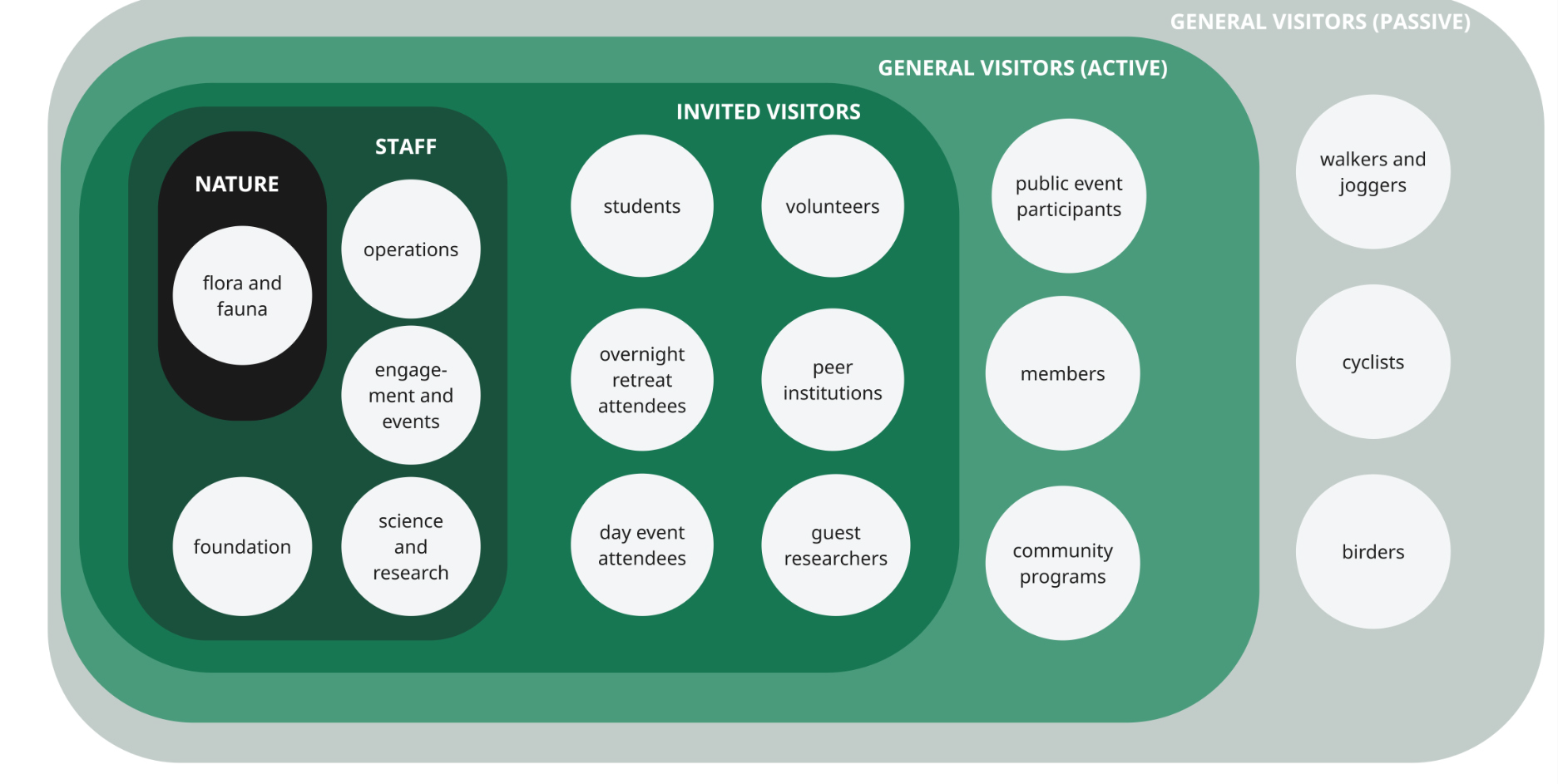
The physical campus is a foundational tool for delivering Duke Farms' mission. Understanding how Duke Farms' audiences and programs interact with the campus and its facilities ensures that future investments advance the long-term vision for the site and the impact Duke Farms seeks to create. The master plan aims to support Duke Farms' current and future audiences as broadly grouped into these five categories:
Nature
The wildlife—flora and fauna—of Duke Farms are direct stakeholders impacted by human activities on campus and should benefit from the outcomes of the master plan.
Staff
The most direct audience is the staff who work from Duke Farms. The master plan rethinks the distribution and design of workspaces across campus to better support current and future staff, accommodate visiting team members and collaborators, and foster stronger cross-departmental collaboration.
Invited visitors
The campus serves many guests who visit Duke Farms for a designated purpose, including students, volunteers, day and overnight event attendees, guest researchers, and representatives from peer institutions. The master plan greatly extends both the physical capacity to accommodate these visitors and the opportunities for demonstration and engagement within visitor facilities.
Actively engaged general visitors
Many visitors—members or participants of public events and community programs—come to Duke Farms for active engagement. The master plan considers both near term enhancements to venues for public engagement through programs, exhibits, and installations, and notes longer-term opportunities to leverage buildings at the edges of campus for shared community use.
Passively engaged general visitors
Many additional members of the public access Duke Farms to recreate and connect with nature through less structured engagement. The plan envisions increased trail access for the general public throughout the less developed areas of the campus.
Duke Farms Programs and Operations
This plan positions the Duke Farms' campus as home to two centers, which will act as the programmatic engines to deliver on the organization's integrated capabilities to restore, demonstrate, and engage.
The Center for Conservation is dedicated to long-term, socio-ecological research and partnerships.
The Center for Engagement delivers mission-aligned convenings and retreats, public programs, and strategic partnerships.
These centers will activate the extent of the Duke Farms campus across all management units. The Center for Conservation's activities will be based on the Western Farms with a new research facility at Building 74. The Center for Engagement operates primarily from the Farm Barn and Core Campus.
The two programmatic centers are underpinned by Sustainable Operations, the management of legacy facilities, sustainability initiatives, and supporting infrastructure. Sustainable operations will be based from a new operational support facility on the Core Campus.
Centers and Operations Synergies
This plan activates unique opportunities for impact arising from the synergies across Duke Farms' programmatic centers, sustainable operations, and the land, buildings and infrastructure of the campus.
Campus as a Living Laboratory
Creating a feedback loop using built and natural landscapes as a testbed for research, applying findings into operations, and informing research through operational lessons learned.
Campus as a Teaching Tool
Using the campus as a demonstration of replicable best practices and innovation in land restoration, conservation science, and sustainable operations.
Campus as a Catalyst
Leveraging the natural and built assets of the campus to create opportunities for conservation programs, partnerships, demonstration, and engagement.
Looking Forward: The Future of Duke Farms Campus
Duke Farms Campus Plan
The 2026 Duke Farms Master Plan advances existing planning to unlock opportunities within each management unit of Duke Farms in alignment with its strategic capabilities. While certain areas of activation serve the Center for Conservation, the Center for Engagement, or the underlying operations of campus, other interventions unlock synergistic opportunities across several capabilities and program areas.
A combination of site and utility work; building renovations, retrofits, and additions; selective deconstruction; and selective new construction are proposed within each management unit. Additional details about the approach for each project and potential sequencing can be found below.
Campus plan explorer
Choose a strategic management unit to focus future activities, then select a map feature to open its ArcGIS popup.
Loading the campus plan map…
Master plan project explorer
Choose a project to focus it on the map and review its master plan details.
Loading the master plan projects map…
Master Plan Implementation
Sequencing Implementation
While the implementation of the previous master plan was completed nearly in a single phase and with a minimally operating campus, this plan must be implemented over time within the context of the current Duke Farms operations, and in response to financial, partnership, and programmatic opportunities as they arise. To understand the impacts of various sequences of implementation, three approaches are presented here that explore prioritization of numerous drivers including existing conditions, sustainability goals, programmatic impact, partnership opportunities, efficiency of campus management and operations, and potential for revenue generation.
Weighing implementation approaches
Rather than recommend a single approach, these options support flexible implementation by illustrating the benefits and challenges that result from different sequences.
Single major mobilization
All at Once
Investigates how the majority of the master plan scope could be implemented in one mobilization, maintaining staff operations while limiting public access to the campus.
Pros
- Minimizes mobilization costs, reduce risk of inflation, and realize full benefits of the plan as soon as possible.
Cons
- Requires large upfront investment and greatly reduces public access and programs for the duration of construction.
Phase 1: Complete major capital projects2027-2030 - One major mobilization delivers most campus renovations before the site reopens at full capacity.
Phase 2: Long-term resilience and space upgrades2030-2035 - Follow the major mobilization with resilience, lodging, and space upgrades over the longer term.
Implementation Catalysts
There are several threshold issues that can either impede or unlock opportunities to implement the master plan.
01Core campus electrical infrastructure
The core campus is currently operating near the full capacity of the electrical infrastructure. Upgrading this infrastructure is not only essential for utility resilience and decarbonization, it is also a necessary enabling project for any programmatic enhancements on the Core Campus.
02Staff office and workspace
To create more programmable space for engagement, additional staff workspace needs to be created to free up usable space in legacy buildings such as the Coach Barn and Farm Barn. Projects like the Operations Support Facility and Building 74 add workspace to the campus space inventory, allowing staff to decant from spaces needed for engagement and research programs.
03Research facilities
While the Farm Barn acts as a hub for engagement on campus, conservation science lacks a similar flagship building to attract partnerships and collaborators. Establishing Building 74 and the Western Farms as a hub for conservation science unlocks substantial programmatic and funding opportunities.
Regulatory Considerations
The implementation of the plan as a whole and building-by-building is subject to varying regulatory requirements. Each of these will impact the planning and permitting timeline and should be considered as part of the implementation strategy.
Wetlands and sewer limits
Duke Farms must adhere to wetlands and sewer limit regulatory requirements from the state of New Jersey. Wetland requirements could be addressed at the project-by-project scale with a build up to a campus-scale LOI (Letter of Interpretation). Sewer limits, however, must be established at the onset of the implementation of this plan, and this permitting process could take 12-18 months to complete. Reference Appendix C for additional detail.
Resilience requirements
Duke Farms must adhere to stormwater and floodplain management regulatory requirements from the state of New Jersey. It should be noted that these requirements are currently under evaluation at the state, and new requirements are subject to launch in July 2027. It is recommended Duke Farms submit any permitting applications by April 2027 to fall within current regulatory requirements. Reference Appendix C for additional detail.
Easements
Certain parcels of the Duke Farms campus are protected by permanent conservation easements, which limits how these parcels can be managed in perpetuity. These parcels are protected for conservation and biodiversity protection, and these easements need to be considered for other regulatory requirements.
Local Zoning Requirements
Implementation of the plan will require ongoing coordination with local zoning and land use regulations administered by Hillsborough Township. While many projects may qualify as permitted uses or involve improvements to existing facilities, others may require site plan review, variances, or other municipal approvals depending on the scope and location of the work. Early coordination with Township staff is recommended to identify permitting requirements, align project schedules, and ensure proposed improvements are consistent with local planning objectives while support Duke Farms' long-term conservation, education, and operational mission.